Job Hunting in the Fall of 2026
My personal experience with job hunting in the fall of 2026.
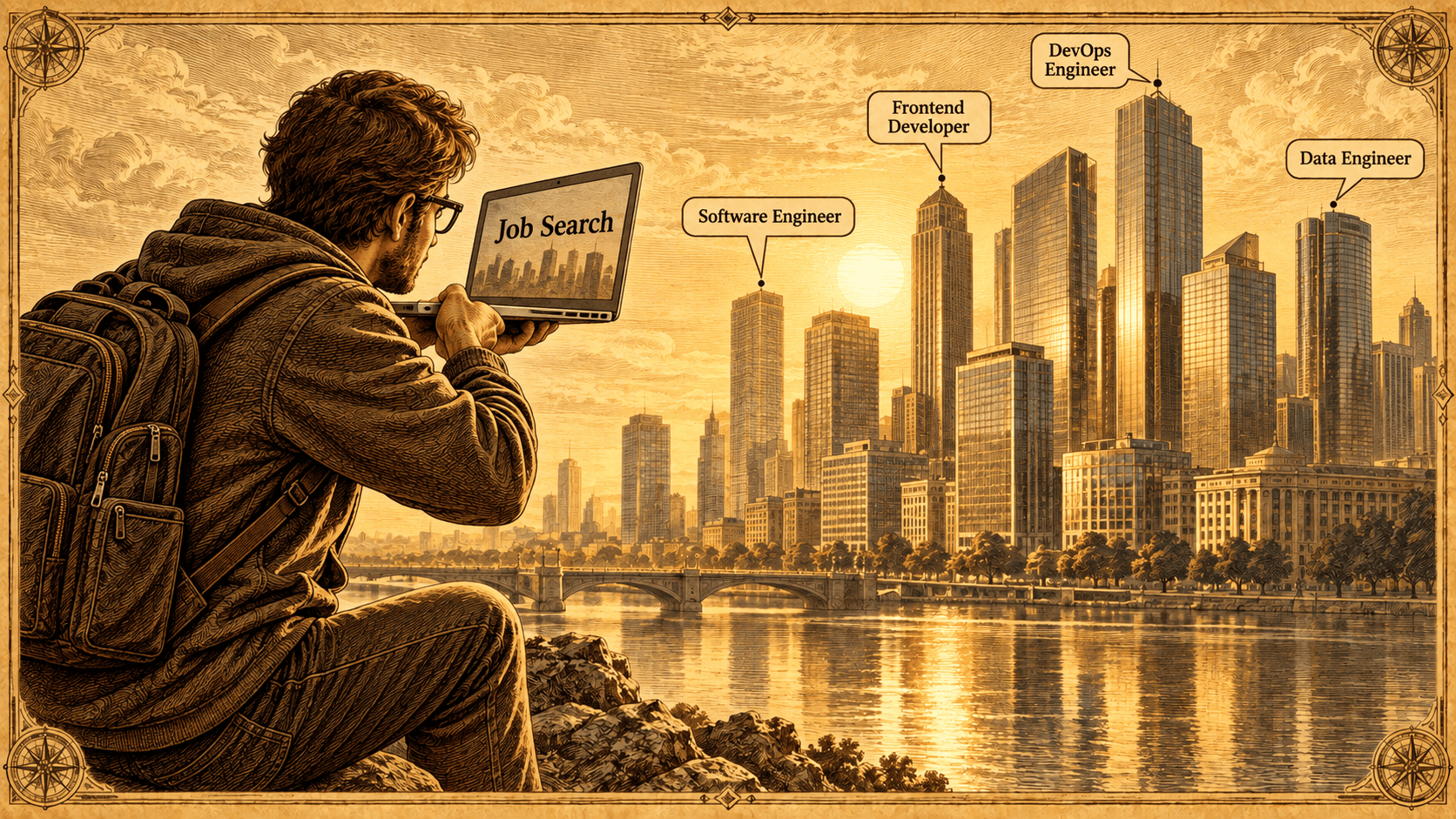
I am currently searching for a new project to be part of. I'm writing this not to rant about the situation, but to capture a timestamped view of where we are right now, as there are a lot of changes in the industry I work in.
Is job hunting really that hard?
I think it really depends on your situation in life. If you have a family to feed, a mortgage to pay, and no emergency fund, it can be frustrating because you are forced to find a new job ASAP.
But if you are not in that situation, it may not drain you as much. And I am fortunate to be in that position right now.
How is AI shaping the industry?
In software engineering, AI is causing a lot of disruption. AI is made by software engineers, and there are a lot of open-source codebases that LLMs can be trained on. As a result, frontier models are really good at coding, and there are a lot of coding tools.
The natural question is:
Why do I need a software engineer when I have an LLM that can build anything I want?
I see two main reasons:
- The first is building the product. Given the same AI tools, I'll probably be better at prompting and at keeping the architecture of the whole product in mind.
- The second is deploying and maintaining it, as you can't serve your customers from
localhost:3000.
What does that mean?
The job and responsibilities of a software engineer are changing.
With many years of experience in the field, senior engineers will become staff engineers or software architects. This will be beneficial for the industry.
The big question is: how will junior developers gain the right experience? They can take on more senior work with AI, but they may not learn through mistakes the way today's senior engineers did. It will be a different learning path, and they will need to ask the right questions while working with AI. Right now, no one knows how beneficial this will be in the future.
AI-Native Engineers
AI is now everywhere. And I fully understand why. It helps a lot. I wrote this blog post myself, but I used AI to check its grammar. I ran the check manually, though it could be automated. And who will build that automation for your use case?
- Automation Engineer?
- AI Automation Engineer?
- AI-Native Engineer?
Any of these could be right—or wrong.
There are no exact definitions out there. The letters "AI" are often thrown into job descriptions. Sometimes it's clear from the other bullet points in a job posting what the company wants; sometimes it isn't.
What are the possibilities if you see the job title AI-Native Engineer?
- You are building the product with an AI coding assistant. Right now you can use Claude from Anthropic, Codex from OpenAI, and Kimi Code from MoonShot AI and Cursor, which was recently bought by SpaceX.
- You are building AI capabilities into the final product. You can spot this type of job posting when it asks for knowledge of RAG, PyTorch, LangChain, and LangGraph.
There is always new technology that engineers need to learn and use.
As a software engineer, you always have new technology to learn. For web development, it has been quite a journey:
HTML + CSS -> + JS -> + AJAX -> + jQuery -> React / Angular -> + Redux -> + hooks -> + SSR
Somewhere along the way, you used PHP on the backend, changed PHP frameworks multiple times, and ended up with Laravel. Or perhaps you moved to Next.js or a different tool in TypeScript ecosystem.
Now it's LLM APIs and how to feed them the right data so they can surface it to clients (that's the RAG part).
And since most tools in the LLM space use Python, I recently saw a recruiter trying to find a Python backend engineer—as if they had disappeared when everyone switched to AI...
Is it a big shift?
Overall, I don't think so. Let's say you stay at one job for three to five years, focusing on delivering value with the technology you know, with a little learning on the side.
Then you decide to change jobs.
During that time, plenty of new technology has come out, often too quickly for you to get hands-on experience during your "little bit of learning" window. Every job hunt brings a lot of new stuff to learn.
Now it's AI in both respects: using it and implementing it in a product.
In another three to five years? We'll see.
See you next Monday.